
The Rock Star Lie
Why Believing in Geniuses Is Breaking Creative Teams

The ad industry loves to scoff at the term “rock star” and then turn around and expect people to be one. No roadmap. No mentorship. Just vibes.
We’ve mistaken grit for greatness and made struggle the entry fee.
This is a piece about what that mindset costs us and why killing the myth might be the most generous thing we do for the next generation.
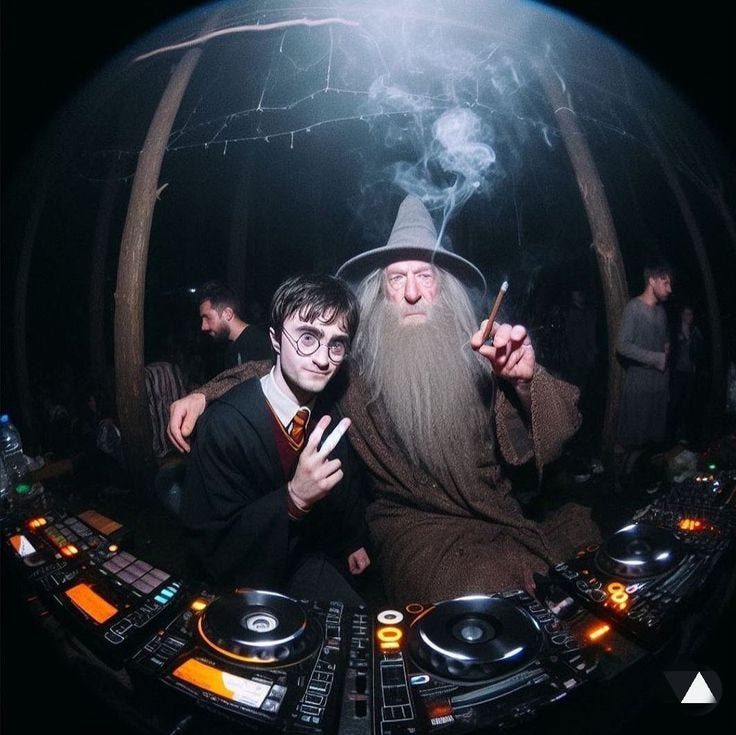
For an industry that rolls its eyes at the term “rock star,” we sure do believe in them.
We’ve built whole systems around the myth: that some people just have it. That creative brilliance is innate. That when someone steps into leadership, we can push them off the cliff and see if they fly. And if they don’t? Well, maybe they never had it in the first place. Maybe they weren’t meant to be great.
We don’t say it out loud, but it’s in how we hire. How we promote. How we discard.
How we silently nod when someone struggles and think, They just didn’t figure it out like I did.
There’s a kind of warped pride in making it without help. It’s not enough to succeed, you have to succeed without support, without instructions, without anyone putting their neck on the line for your development. We fetishize the struggle. And in doing so, we reinforce the idea that true talent doesn’t need scaffolding, only a spotlight.
In a rare act of egoless acknowledgment, we’ll weakly nod to someone who meant a lot to our career, but never with enough force to inspire others to show up that way for someone else.
Here’s the problem with all that.
When you build a system around genius, you actually produce fewer geniuses.
The Myth We Inherited
The legend of the creative rock star is deeply rooted in our industry. We’ve all worked with (or heard stories about) the savant who cracked the iconic campaign in an hour. The one with “the touch,” the swagger, the late nights and tantrums and Cannes Lions.
Sometimes the work justified the chaos.
Sometimes the chaos was just that.
And while we’ve done a lot to clean up the bad behavior that used to get swept under the brilliance rug, we haven’t dismantled the pedestal. We’re still using the same criteria. Still expecting people to rise with no roadmap. Still rewarding the ones who figure it out “on their own” even when that means they hoard information, burn out, or leave a trail of damage in their wake.
The Reality We’re In
The next generation doesn’t buy into the myth.
And we hold it against them.
They were raised in a curated world. Social platforms taught them to value results over process. To delete the draft that didn’t perform. To showcase only the wins.
They’ve been trained to publish the highlight reel, not the mess of making.
So when we drop them into an industry full of unwritten rules and vague expectations, and expect them to “just swim,” they freeze. Or flail. And we call it a lack of resilience.
But what it really is, is a lack of exposure to how great work gets made.
Because we don’t show the process anymore.
When the Work Was on the Walls
Years ago, at an agency where I worked, every piece of work, good, bad, and ugly, was literally up on the walls. We killed so many trees. But you could walk the walls and see the evolution of a script: the terrible first round, the slightly worse second round, the killer third.
You could learn from your peers on the way to the bathroom.
Now that everything’s digital and distributed, that visibility is gone. We’re not surrounded by the process anymore. And without peer exposure, there’s no tension. No unspoken competition. No opportunity to see how someone else rewrote the headline you thought was perfect and fuck if they didn’t make it twice as good.
So much of learning used to happen in practice, by being in proximity to other people’s work. That’s how many of us learned to be “rock stars.”
Not because we had it in us from day one but because we could see what better looked like.
Now, that learning has to be intentional.
And it generally isn’t.
Mentorship Isn’t Weakness. It’s Infrastructure.
We say we don’t have time to mentor because we’re too busy doing the work. But if we’re honest, many leaders just don’t know how. Many leaders were never mentored themselves, just survivors of the hunger games.
And survival doesn’t breed generosity. It breeds gatekeeping.
Meanwhile, the research is clear: greatness can be taught. Mentorship improves outcomes, satisfaction, and retention. It turns potential into performance.
And if there’s one thing we know about rock stars, it’s that they practice.
Because true brilliance isn’t just talent.
It’s talent that’s developed, challenged, supported.
It’s talent that sees how the work actually gets made.
The Case for Killing the Myth
We don’t need more legends.
We need more infrastructure for growth.
We need to stop measuring people by whether they “nailed it on the first try.”
We need to get more comfortable seeing the mess, sharing the process, and inviting people in.
This doesn’t mean coddling.
It means context.
It means creating environments where potential can actually reach its peak.
Not remote work models RTO’d into shared space, but intentional moments of creation that don’t require Wi-Fi or AI.
There will always be unicorns who pull off something brilliant on the first pass. But a strong team of decent musicians with a shared vision, the right support, and the space to take creative risks?
They can make one hell of an album, too.
So What Happens If We Stop Looking for Rock Stars?
Maybe we get fewer prima donnas.
Maybe we get more equity.
Maybe we get better work.
More consistent work.
More sustainable careers.
Maybe we stop defining greatness by who swam the fastest in shark-infested waters.
And start defining it by how many people we taught to swim.
I love this so much, great read!
Well said!